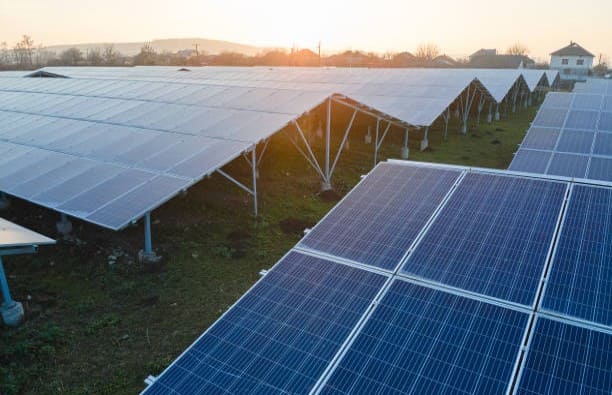
Bifacial solar panels can generate electricity from both their front and back surfaces, capturing reflected light that traditional panels miss. As this technology becomes more common in 2026, Darwin homeowners are asking whether bifacial panels NT installations make sense for residential rooftops.
This guide explains how bifacial solar panels work, where they perform best, and whether the technology offers real benefits for homes in Darwin, Palmerston, Alice Springs, Katherine, and Tennant Creek.
How Bifacial Panels Work
Traditional monofacial panels have an opaque backing that blocks light from reaching the rear of the cells. Bifacial panels use a transparent or reflective back sheet, allowing light to reach both sides of the solar cells.
Bifacial Panel Structure
| Component | Monofacial Panel | Bifacial Panel |
| Front surface | Glass with anti-reflective coating | Glass with anti-reflective coating |
| Solar cells | Standard efficiency cells | Often N-type high-efficiency cells |
| Back surface | Opaque backsheet (white/black) | Transparent glass or clear backsheet |
| Light capture | Front only (100%) | Front (100%) + rear (5-30% additional) |
| Frame | Standard aluminium | Often frameless or minimal frame |
The rear side captures diffuse and reflected light from the ground, nearby surfaces, and scattered sunlight. This additional generation is called bifacial gain.
Bifacial Gain: What to Expect
Bifacial gain varies significantly based on installation conditions. Understanding realistic expectations helps evaluate whether bifacial panels in NT homes benefit from the technology.
Typical Bifacial Gain by Installation
| Installation Type | Bifacial Gain | Notes |
| Flush roof mount (dark tiles) | 2-5% | Minimal rear irradiance |
| Flush roof mount (light tiles) | 5-8% | Moderate reflection from tiles |
| Tilted ground mount (grass) | 8-12% | Better rear exposure |
| Tilted ground mount (sand/concrete) | 12-20% | High reflection from light surfaces |
| Elevated mount (white surface) | 15-25% | Optimal for bifacial performance |
| Commercial flat roof (white) | 10-15% | Good potential with proper mounting |
For typical Darwin residential rooftop installations with standard flush mounting on dark roof tiles, bifacial gain is typically 3-8%. This modest improvement may not justify a significant price premium.
When Bifacial Makes Sense in the NT
Certain situations favour bifacial panels NT installations over traditional monofacial options.
Ideal Conditions for Bifacial
| Condition | Why It Helps Bifacial |
| Light-coloured roof | Reflects more light to panel rear |
| Elevated mounting | Air gap allows reflected light to reach back |
| Ground-mount system | Can optimise tilt and height for rear gain |
| Commercial flat roof | White membrane reflects light effectively |
| High albedo surroundings | Sand, concrete, or white surfaces nearby |
| Adequate mounting height | At least 30cm clearance improves gain |
For Darwin homes with dark Colorbond roofs and flush mounting (the most common configuration), monofacial panels often provide better value. The bifacial premium is better spent on higher wattage or better quality standard panels.
Important Read: Solar in Darwin: The Complete 2026 Guide for NT Homeowners
Bifacial vs Monofacial: Cost Analysis
Understanding the cost-benefit equation helps determine whether bifacial panels NT purchases make financial sense.
| Factor | Monofacial | Bifacial |
| Panel cost (440W equivalent) | $180-$250 | $220-$320 |
| Premium | - | 20-30% higher |
| Output (flush mount) | 100% | 103-108% |
| Output (optimised mount) | 100% | 110-120% |
| 25-year generation (6.6kW) | 240,000 kWh | 248,000-265,000 kWh |
| Additional generation value | - | $800-$2,500 over 25 years |
For most Darwin residential solar installations with flush roof mounting, the 20-30% premium for bifacial panels only delivers 5-8% additional generation. The payback on that premium can take 10-15 years, making it a marginal value.
Commercial Applications
Bifacial panels NT commercial installations often make more sense than residential applications.
Why Bifacial Works Better for Business
Commercial buildings frequently have white or light-coloured flat roofs that reflect significant light to panel rears. Tilt-frame mounting on flat roofs provides the elevation that bifacial panels need. Larger systems spread the mounting cost over more panels, improving economics. Additionally, the scale of commercial solar installations can justify premium panel choices.
A Darwin commercial installation on a white membrane roof with 15-degree tilt mounting might achieve 12-18% bifacial gain, making the premium worthwhile.
Bifacial Panel Brands Available
Major manufacturers now offer bifacial options in their premium ranges.
| Brand | Bifacial Model | Efficiency | Bifacial Factor |
| Jinko | Tiger Neo Bifacial | 22.5%+ | Up to 80% rear efficiency |
| Trina | Vertex N Bifacial | 22.0%+ | Up to 80% rear efficiency |
| Canadian Solar | BiHiKu7 | 22.0%+ | Up to 85% rear efficiency |
| LONGi | Hi-MO 6 Bifacial | 22.3%+ | Up to 80% rear efficiency |
| REC | Alpha Pure-RX Bifacial | 22.3%+ | Up to 75% rear efficiency |
Quality brands like Jinko and REC offer bifacial versions of their popular panels. However, their standard N-type panels often provide better residential value.
Frequently Asked Questions
Are bifacial panels worth it for my Darwin home?
For most Darwin homes with flush-mounted panels on standard roofs, probably not. The 5-8% gain from bifacial does not justify the 20-30% premium. Your money is better spent on higher-wattage standard panels or battery storage.
Do bifacial panels work on tiled roofs?
They work but underperform their potential. Tiled roofs (especially dark tiles) do not reflect much light, limiting rear-side generation to 3-5%. Light-coloured metal roofs perform slightly better.
How much extra power do bifacial panels produce?
Typically 5-25% more than equivalent monofacial panels, depending heavily on installation conditions. Residential rooftop installations usually see the lower end (5-8%), while optimised ground or commercial mounts achieve the higher end.
Do bifacial panels need special mounting?
To maximise bifacial gain, panels need clearance from the roof surface (ideally 30cm+) and should be positioned above reflective surfaces. Standard flush mounting reduces their advantage significantly.
Are bifacial panels more durable?
Glass-glass bifacial panels (with glass on both sides) are typically more durable than glass-backsheet panels. They resist moisture ingress better and often come with longer warranties. However, they are also heavier.
Should I choose bifacial for a ground-mount system?
Ground-mount systems are where bifacial panels NT technology shines. With proper tilt, height, and reflective ground cover (gravel, sand, or white mulch), a bifacial gain of 15-25% is achievable, making the premium worthwhile.
Important Read: Solar Panel Cleaning & Maintenance in Darwin: The Complete Guide to Maximizing Your System Efficiency
Making the Right Panel Choice
Bifacial technology is genuinely innovative, but it is not universally superior. The best panel choice depends on your specific installation conditions, not just the technology label.
Oneroof Solar helps homeowners across Darwin, Palmerston, Alice Springs, Katherine, and Tennant Creek choose panels that deliver the best value for their specific situation. We assess your roof, mounting options, and budget to recommend whether bifacial or standard panels make more sense.
Verdict: Bifacial panels are impressive technology but are not the best choice for most Darwin residential rooftops. With typical flush mounting on standard roofs, bifacial gain is limited to 5-8%, making the 20-30% price premium hard to justify. For ground-mount systems, commercial flat roofs with white membranes, or installations with elevated mounting over reflective surfaces, bifacial panels can deliver meaningful additional generation. Most Darwin homeowners are better served by investing the bifacial premium into higher wattage standard N-type panels or battery storage, which provide more predictable value regardless of mounting conditions.
Note: Panel recommendations depend on your specific roof and installation conditions. Contact Oneroof Solar for advice tailored to your situation.
───────────────────────────────────────────────────────────────────────────────────
Get Your Free Solar Consultation
Contact Oneroof Solar for expert panel advice:
Darwin Office Address: Level 1/48-50 Smith St, Darwin City NT 0800
Phone: 08 8004 7888
Hours: 8 am - 6 pm (7 days)
Alice Springs Office Address: 44 Zeil St, Araluen NT 0870
Phone: 04 8393 7004
Hours: 9 am - 6 pm (Sunday closed)
Website: oneroofsolar.com.au
Serving Darwin, Palmerston, Alice Springs, Katherine, and Tennant Creek with quality solar installation services.
───────────────────────────────────────────────────────────────────────────────────
About the Author
This article is brought to you by the expert team at Oneroof Solar, the Northern Territory's most trusted local solar installers and service providers. With over 200 successful installations across Darwin, Palmerston, Alice Springs, Katherine, and Tennant Creek, we are passionate about helping Territory families and businesses achieve complete energy independence through quality solar and storage solutions designed for the NT's unique climate.