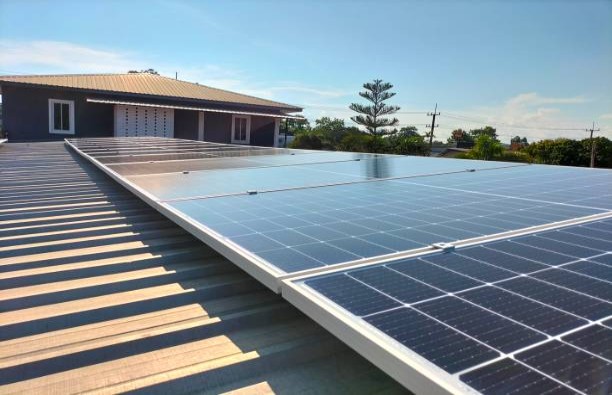
One of the most common questions Darwin homeowners ask when planning a solar installation is whether to include a battery. The answer is not simply a matter of preference — it is a financial question with measurable outcomes that depends on your household’s consumption patterns, your energy goals, and the rebates currently available. In 2026, with the NT Battery Grant Scheme offering up to $6,000 towards eligible battery installations, the financial case for adding storage to a solar system in Darwin is stronger than at any point in the Territory’s solar history. This guide cuts through the marketing noise and presents the real numbers — costs, savings, payback periods, and long-term returns — for both scenarios, so Darwin, Palmerston, Alice Springs, Katherine, and Tennant Creek homeowners can make this decision based on facts rather than assumptions.
Understanding the Fundamental Difference
A solar-only system generates electricity during daylight hours and uses what the household needs in real time. Any excess generation that is not immediately consumed is exported to the grid at the feed-in tariff rate — currently around 8 to 10 cents per kilowatt-hour in the NT. When the sun is not shining, the household draws power from the grid at the much higher import tariff of 29 to 35 cents per kilowatt-hour. The gap between these two rates — what you receive for exported solar versus what you pay for grid imports — is the fundamental financial argument for solar battery storage NT. A battery captures the excess daytime solar generation that would otherwise be exported cheaply, and makes it available in the evening when grid power is most expensive.
| Energy Flow | Solar Only | Solar + Battery | Financial Impact |
| Daytime solar use | Direct use at full avoided rate (29–35c/kWh) | Direct use at full avoided rate (29–35c/kWh) | Same for both |
| Excess daytime solar | Exported at feed-in tariff (8–10c/kWh) | Stored in battery for later use | Battery: 19–25c/kWh advantage per kWh stored |
| Evening power | Grid import at 29–35c/kWh | Battery discharge at zero cost | Battery: $0 vs 29–35c/kWh |
| Grid outage (storm) | No power once grid fails | Battery maintains essential circuits | Battery: invaluable in Darwin wet season |
| Self-sufficiency rate | Typically 30–45% of generation used on-site | Typically 70–85% of generation used on-site | Battery: doubles self-sufficiency |
The Real Numbers: Solar Only vs Solar Plus Battery in Darwin
The following figures are based on a typical Darwin household consuming 25 kWh per day, with a 6.6kW solar panel system. The battery scenario uses a 13.5kWh lithium battery — the most popular size for Darwin homes and the capacity that qualifies for the full NT Battery Grant Scheme rebate of up to $6,000. All figures reflect current NT electricity tariffs, feed-in rates, and 2026 rebate values.
| Financial Metric | 6.6kW Solar Only | 6.6kW Solar + 13.5kWh Battery |
| System cost (before rebates) | $6,500–$8,500 | $13,500–$17,500 |
| Federal STC rebate | $3,200–$3,800 | $3,200–$3,800 |
| NT Battery Grant Scheme | Not applicable | Up to $6,000 |
| Net cost after rebates | $2,700–$5,300 | $4,300–$8,300 |
| Annual electricity bill saving | $1,400–$1,800/year | $2,200–$2,800/year |
| Simple payback period | 1.5–3.8 years | 1.5–3.8 years (with grant) |
| 10-year net benefit | $9,000–$15,500 | $17,700–$23,700 |
| 25-year net benefit (estimated) | $26,000–$37,000 | $42,000–$57,000 |
Why the NT Battery Grant Changes the Equation Dramatically
Without the NT Battery Grant Scheme, the payback period for adding a battery to a Darwin solar system is typically five to eight years based on savings alone. With the grant reducing the net battery cost by up to $6,000, the payback calculation changes fundamentally. In many cases, the grant effectively makes the battery self-funding within three to four years, after which every year of battery-enhanced savings is pure financial benefit. The NT Battery Grant Scheme is the single most compelling reason to include storage in your solar battery installation, Darwin project now, before May 1, when grant availability may be affected by the funding round position.
| Battery Cost Scenario | Battery Cost Before Grant | NT Grant Applied | Net Battery Cost | Payback (Savings Only) |
| Entry 10kWh battery | $5,500–$7,000 | Up to $6,000 | $0–$2,000 | 0–1.5 years |
| 13.5kWh battery (mid-range brand) | $7,000–$9,000 | Up to $6,000 | $1,000–$3,000 | 0.4–1.4 years |
| 13.5kWh battery (premium brand) | $9,000–$11,500 | Up to $6,000 | $3,000–$5,500 | 1.1–2.5 years |
| 2 x 13.5kWh (whole-home backup) | $14,000–$20,000 | Check combined eligibility | $8,000–$14,000 | 2.9–6.4 years |
Beyond the Numbers: The Non-Financial Case for Battery Storage in Darwin
The financial comparison alone makes a compelling case for home solar battery Darwin in 2026. But for Darwin homeowners, there is a second equally important dimension: resilience. Darwin’s wet season delivers grid outages that southern Australian cities simply do not experience. When a storm takes out a power line in suburban Darwin or across Palmerston, a household without battery backup has no power until the grid is restored — which can take four to 24 hours or longer depending on the severity of the event. A household with a 13.5kWh battery maintains essential circuits — refrigeration, lighting, phone charging, medical equipment, and fans — throughout most outage events without interruption.
For Darwin families with young children, elderly residents, or medical dependencies, this resilience value is difficult to quantify in dollar terms but is genuinely significant. For all NT homeowners, the peace of mind of knowing that a Category 2 storm will not leave the household without power for a day or more is a real quality-of-life benefit that does not appear in any payback period calculation.
| Non-Financial Benefit | Solar Only | Solar + Battery | Darwin Relevance |
| Grid outage resilience | None — grid-dependent | 4–12+ hours of essential circuit backup | Very High — wet season outages common |
| Energy independence | Partial — evening grid dependent | High — 70–85% self-sufficient | High — reduces grid dependence |
| Peace of mind (storm season) | Low — fully exposed to outages | High — protected for most outage durations | Very High for Darwin families |
| Future EV charging readiness | Limited without storage | Strong — battery stores solar for EV overnight | Growing as EVs increase in NT |
| VPP participation potential | Not possible | Eligible for VPP programmes | Financial benefit opportunity |
Which Households Benefit Most from Adding a Battery in Darwin?
Not every Darwin household benefits equally from battery storage. The households that see the strongest financial return from adding a lithium solar battery in Darwin are those with high evening electricity consumption, households that are away from home during the day (meaning less direct solar self-consumption), and homes with high air conditioning loads that run into the evening. Households where someone is home throughout the day and can shift their major appliance use to solar hours will already have relatively high self-consumption without a battery, and the incremental financial benefit of storage will be somewhat lower — though still positive.
| Household Profile | Solar Only Suitable? | Battery Recommended? | Primary Reason |
| Work-from-home, high daytime consumption | Yes — good self-consumption rate | Still recommended for evening and outages | Evening savings and storm resilience |
| Out of home during the day, high evening use | Less optimal | Strongly recommended | Daytime generation otherwise exported cheaply |
| High air conditioning use in evenings | Poor — high evening grid draw | Strongly recommended | Battery eliminates high-cost evening AC grid draw |
| Medical equipment dependency | Not appropriate alone | Essential | Backup power during Darwin storm outages |
| EV owner or planning EV purchase | Suboptimal | Strongly recommended | Battery charges from solar; powers EV overnight |
Pricing Disclaimer: All cost figures are indicative estimates for the Northern Territory market as of April 2026, and may vary based on system size, property type, and installer rates. Contact Oneroof Solar for a precise quote tailored to your specific situation.
Frequently Asked Questions
Is a battery worth adding to a Darwin solar system in 2026?
For most Darwin homeowners in 2026, yes. The combination of the NT Battery Grant Scheme reducing the net battery cost by up to $6,000, Darwin’s high electricity import tariffs of 29 to 35 cents per kilowatt-hour, and the genuine resilience value during wet season outages makes solar battery installation in Darwin financially compelling at current grant levels. The financial case is strongest for households with high evening consumption and for those who value storm-season resilience.
What is the payback period for a solar battery in Darwin?
With the NT Battery Grant of up to $6,000 applied, the payback period for a 13.5kWh battery added to a 6.6kW Darwin solar system is typically 1.5 to 3.5 years based on electricity savings alone. Without the grant, payback extends to four to seven years. Given that quality lithium batteries carry 10-year warranties and realistic operating lives of 12 to 15 years, even the longer payback period without the grant produces a strongly positive return over the battery’s lifetime.
How does the NT Battery Grant Scheme work?
The NT Battery Grant Scheme provides eligible NT homeowners with a rebate of up to $6,000 towards the purchase and installation of an approved battery system. The grant is applied at the time of installation as a discount, meaning eligible homeowners do not need to pay the full amount upfront and wait for a rebate. Oneroof Solar manages the grant application process on behalf of customers, confirming eligibility and ensuring all documentation meets scheme requirements before installation day.
Can I add a battery to my existing Darwin solar system?
Yes. Adding a battery backup solar Darwin to an existing solar system is straightforward in most cases. The options depend on your existing inverter type. Systems with a compatible hybrid inverter can connect a battery directly. Systems with a standard string inverter use AC coupling, which adds a battery inverter alongside the existing system. Oneroof Solar assesses existing systems and recommends the most cost-effective battery addition pathway for your specific installation.
What size battery is best for a Darwin home?
The 13.5kWh battery is the most popular and most financially appropriate size for most Darwin households. It provides 7 to 10 hours of essential circuit backup during a grid outage, is sized to store the typical excess daily generation from a 6.6kW system during the dry season, and qualifies for the full NT Battery Grant. Smaller batteries (6.5 to 10kWh) suit smaller households or those with lower evening consumption, while two-battery configurations suit homeowners seeking whole-home backup capability.
Do batteries work well in Darwin’s heat?
Lithium batteries operate between 15 and 35 degrees Celsius. Darwin’s ambient temperatures can exceed this range for outdoor or unventilated installations. Correct siting — in a shaded, ventilated indoor location such as a garage or laundry — keeps battery temperatures within the optimal operating range and protects long-term capacity. Oneroof Solar assesses battery siting carefully for every solar battery system Darwin installation to ensure thermal performance is optimised for the NT climate.
What happens to my battery rebate if I wait until after May 1?
The NT Battery Grant Scheme is subject to funding availability, and applications submitted after April 30, 2026, may face reduced grant amounts or longer processing times depending on the remaining budget position. Additionally, the federal STC rebate — which applies to the panels component of a solar-plus-battery installation — expires on May 1. Together, these two changes mean that waiting until May could cost Darwin homeowners $1,200 to $3,500 in combined rebate value. Contact Oneroof Solar this week to confirm your eligibility and secure your April installation date before this deadline passes.
Verdict
For Darwin homeowners making this decision in April 2026, the real numbers strongly favour including a battery in your solar installation. The NT Battery Grant Scheme transforms what would otherwise be a five-to-seven-year payback into a one-to-three-year payback, while delivering year-round electricity savings and genuine storm-season resilience that a solar-only system cannot provide. Homeowners across Darwin, Palmerston, Alice Springs, Katherine, and Tennant Creek who act before May 1 will capture the maximum available rebate value and begin benefiting from complete energy independence sooner than any other time in the NT’s solar history. Contact Oneroof Solar today to receive your personalised solar battery installation Darwin quote and confirm your April installation date.
Get Your Free Solar Consultation
Contact Oneroof Solar for expert solar and battery installation in Darwin:
Darwin Office Address: Level 1/48-50 Smith St, Darwin City NT 0800
Phone: 08 8004 7888
Hours: 8 am - 6 pm (7 days)
Alice Springs Office Address: 44 Zeil St, Araluen NT 0870
Phone: 04 8393 7004
Hours: 9 am - 6 pm (Sunday closed)
Website: oneroofsolar.com.au
Serving Darwin, Palmerston, Alice Springs, Katherine, and Tennant Creek with quality solar installation services.
About the Author
This article is brought to you by the expert team at Oneroof Solar, the Northern Territory’s most trusted local solar installers and service providers. With over 200 successful installations across Darwin, Palmerston, Alice Springs, Katherine, and Tennant Creek, we are passionate about helping Territory families and businesses achieve complete energy independence through quality solar and storage solutions designed for the NT’s unique climate.