Darwin’s wet season is unlike anything experienced elsewhere in Australia. Between October and April, the Top End receives over 1,700mm of annual rainfall, endures more than 80 days of lightning activity, and sees humidity levels that consistently exceed 80 per cent. For homeowners who have invested in solar in Darwin, this period represents the most demanding test of the year for any solar panel installation Darwin property can face. Systems that are not properly prepared before the wet season can see generation drop by 25 to 35 per cent, suffer electrical faults from surge damage, and experience premature component failure. With proper solar panel maintenance, Darwin homeowners carry out before the season begins, your system can remain productive and well protected throughout. This guide covers every preparation step for households across Darwin, Palmerston, Alice Springs, Katherine, and Tennant Creek.
Why Darwin’s Wet Season Puts Solar Systems Under Pressure
The wet season creates a combination of conditions that affect every component of a residential solar installation on a Darwin property. Heavy cloud cover reduces peak sun hours from the dry season average of 8 to 8.5 hours down to 5.5 to 6.5 hours per day. Lightning storms generate voltage spikes that can damage solar inverters Darwin depends on for daily operation. Sustained humidity accelerates corrosion on mounting hardware and electrical connections. Understanding these challenges is the starting point for protecting your investment in solar in Darwin.
| Factor | Dry Season | Wet Season | Impact on Solar Generation |
| Peak Sun Hours | 8–8.5 hours/day | 5.5–6.5 hours/day | 25–35% generation reduction |
| Lightning Days | 0–2 per month | 20–25 per month | Surge damage risk to inverters |
| Humidity Level | 20–40% | 75–90% | Connector and mounting corrosion |
| Monthly Rainfall | Near zero | 150–300mm | Panel soiling from splash debris |
| Cloud Cover | Minimal most days | Heavy and intermittent | Reduced irradiance and output |
Pre-Wet Season Inspection Checklist
A thorough inspection before the wet season is the single most important step in solar system service maintenance Darwin professionals recommend each year. This inspection should be completed by a qualified solar technician, ideally in September or early October, before conditions deteriorate. The cost is modest compared to the risk of a damaged inverter or battery during peak storm season.
Panel and Mounting System Inspection
The mounting system is your first line of defence against Darwin’s wet season winds and rain. Panels that are not secured correctly can shift, allowing water ingress into junction boxes and wiring conduits. A qualified technician will check that all clamps, rails, and roof penetrations meet manufacturer specifications and Australian Standards for cyclone-rated installations. Inspecting your solar panels for micro-cracks, delamination, and discolouration is also essential at this stage, as damaged cells will accelerate deterioration when exposed to sustained moisture during the wet season.
Electrical and Inverter System Check
Your inverter is the brain of your solar system and one of the most vulnerable components during the wet season. A technician carrying out solar panel maintenance Darwin protocols will check all DC isolators for moisture ingress, inspect conduit sealing, test earth fault protection, and verify that surge protection devices are functional and rated to Australian Standard AS/NZS 1768:2021. A faulty surge protection device is a significant risk in Darwin, where lightning strikes are among the highest frequencies recorded anywhere in Australia. Addressing solar inverter installation vulnerabilities before the season begins is far less expensive than replacing a damaged unit mid-season.
Battery Storage System Check
If your home has battery storage Darwin installed, the pre-wet season inspection should include checking the battery management system, verifying that the enclosure is IP-rated for local conditions, and testing that backup mode functions correctly. Batteries that activate backup power during a grid outage — common during Darwin’s wet season storms — must be in optimal condition to perform when they are needed most. If your battery was installed under the NT Battery Grant Scheme, Oneroof Solar can confirm your backup settings are correctly configured as part of any service visit.
| Inspection Area | What to Check | Recommended Action | Estimated Cost |
| Solar Panels | Micro-cracks, soiling, delamination | Professional visual inspection | $150–$250 |
| Mounting System | Clamps, rails, roof penetration seals | Tighten and reseal as required | Included in inspection |
| Inverter | Surge protection devices, isolators, error logs | Test SPDs and replace if needed | $200–$350 |
| Wiring and Conduit | Conduit sealing, connector integrity | Reseal any exposed conduit entry points | $100–$200 |
| Battery System | BMS status, IP rating, backup mode test | Firmware update and full backup test | $100–$200 |
Know More: Solar in Darwin: The Complete 2026 Guide for NT Homeowners
Solar Panel Cleaning Before the Wet Season
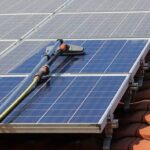
Darwin’s dry season leaves a thick accumulation of red dust, bird droppings, and organic debris on solar panels that can reduce output by 10 to 20 per cent if not addressed before the wet season. Professional solar panel cleaning in Darwin before the wet season arrives is one of the highest-return maintenance tasks available to NT homeowners. A clean panel entering the wet season will perform better during the limited sun hours available and will also benefit from the natural rinsing effect that occurs during lighter rainfall events. Heavy downpours can actually deposit new red dirt and debris rather than removing existing soiling, making a dedicated pre-season clean non-negotiable.
While some homeowners attempt to do-it-yourself rinsing, professional solar panel cleaning service Darwin technicians use deionised water and soft brush systems that clean without scratching the anti-reflective coating. Scratched panels accelerate soiling and can void manufacturer warranties. The same pre-wet season cleaning principles apply for residential solar installation Darwin customers in Palmerston, Alice Springs, Katherine, and Tennant Creek — though Darwin and Palmerston homeowners face the highest wet season intensity and benefit most from a scheduled annual clean.
| Cleaning Method | Cost | Risk Level | Recommended For |
| DIY garden hose rinse only | $0 | Medium — scratch and residue risk | Light surface dust on accessible panels |
| DIY with soft brush and fresh water | $20–$50 (equipment) | Low–Medium | Ground-level panels in Palmerston or Katherine |
| Professional deionised water clean | $150–$300 | Very Low | All Darwin and Palmerston installations |
| Professional clean plus inspection package | $250–$450 | Very Low | Recommended annually before wet season |
Surge Protection: Defending Against Darwin’s Lightning Season
Darwin experiences more lightning activity per year than almost anywhere else in Australia. With more than 80 lightning days annually, the risk of voltage surges reaching your solar system is significant. A direct or nearby lightning strike can produce a voltage spike of thousands of volts — far exceeding the 600 to 1,000V DC ratings that most residential systems operate within. Homeowners considering solar in Darwin must ensure that surge protection devices are installed on both the AC and DC sides of the system to meet Australian Standards.
Surge protection devices have a finite lifespan and will be reduced in effectiveness after absorbing surge energy from nearby strikes. A pre-wet season inspection by the best solar company in Darwin will identify whether your devices need replacement. Systems without functioning surge protection face a real risk of inverter failure, which typically costs $1,500 to $3,000 to replace — a cost far greater than a routine inspection and surge protection upgrade.
| Protection Type | Purpose | Cost (Installed) | Darwin Recommendation |
| Type 1 SPD (DC Side) | Direct lightning strike protection at array level | $200–$350 | Essential for all Darwin systems |
| Type 2 SPD (AC Side) | Voltage spike protection at switchboard level | $150–$250 | Essential — required by AS/NZS 1768:2021 |
| Type 3 SPD (Appliance Level) | Point-of-use protection near inverter | $50–$100 | Recommended for additional protection |
| Lightning Rod System | Building-level protection for elevated properties | $800–$2,000 | Recommended for high-exposure properties |
| Earthing System Check | Verify correct system grounding | $100–$200 | Required for all Darwin home inspections |
Optimising Your Battery Storage for the Wet Season
Homeowners with solar battery installation Darwin systems have a significant advantage during the wet season. When solar generation drops during extended cloudy periods, a charged battery maintains household power without drawing from the expensive grid. During the frequent storms and grid outages that Darwin experiences between October and April, a battery system operating in backup mode is invaluable. Pre-wet season preparation for battery owners should include a full backup mode test, a battery management system health check, and a firmware update if one is available from the manufacturer.
If you do not yet have solar battery storage and are considering adding one before the wet season, the NT Battery Grant Scheme currently provides up to $6,000 in rebates for eligible Darwin homeowners. The wet season makes an excellent case for storage: even without full sunlight, a battery charged from the morning’s generation will carry most Darwin households through a storm outage of four to eight hours. Homeowners in Palmerston, Katherine, and Tennant Creek who experience the same wet season conditions benefit equally from battery backup capability. For finance options to make adding storage more affordable, the solar finance options available through Oneroof Solar include zero-interest payment plans.
| Battery Capacity | Typical Morning Charge (Wet Season) | Estimated Backup Duration | Best Suited For |
| 6.5kWh | 60–70% of capacity | 3–5 hours (essential circuits) | Small homes, 1–2 person households |
| 10kWh | 65–75% of capacity | 5–7 hours (essential circuits) | Medium homes, 2–3 person households |
| 13.5kWh | 65–75% of capacity | 7–10 hours (essential circuits) | Large homes, 4+ person households |
| 2 x 13.5kWh | 65–75% of capacity | 12–18 hours whole-home | Whole-home backup capability |
Monitoring Your Solar System Through the Wet Season
Active monitoring is essential during the wet season for homeowners protecting their solar panel installation in Darwin. Most modern inverters include app-based monitoring that shows real-time generation, consumption, and battery state of charge. During the wet season, checking your system weekly rather than monthly will help you detect issues before they become costly. Watch for generation figures that fall significantly below expected ranges even on partly sunny days, inverter error codes, and battery performance anomalies. Early detection of a fault during the wet season means faster resolution and less downtime from a solar panel repair Darwin perspective.
Know More: Types of Solar panels: Which One is Best for Your Commercial Property?
| Metric to Watch | Warning Sign | Likely Cause | Recommended Action |
| Daily generation (kWh) | Below 30% of dry season average on partly sunny days | Panel fault, soiling, or shading issue | Contact Oneroof Solar for inspection |
| Inverter status display | Error codes appearing after storms | Surge damage or moisture ingress | Book urgent solar panel repair Darwin |
| Battery charge level | Not exceeding 50% charge regularly | Panel performance drop or BMS fault | Check monitoring app and call installer |
| Grid export reading | Zero export on clear sunny mornings | Inverter or DC wiring fault | Book inspection immediately |
| Grid draw (import) | Unexpectedly high grid consumption | Battery not discharging as expected | Check battery settings in app |
After a Storm: Post-Event Inspection Protocol
Following a significant storm, Darwin solar owners should conduct a basic visual inspection before resuming normal system operation. Do not handle any electrical components yourself — contact the repairs and maintenance team at Oneroof Solar for a professional post-storm inspection if any damage is visible. For the initial visual check from ground level, look for displaced or cracked panels, damaged mounting rails, debris accumulation around the inverter or switchboard, and any visible scorch marks near electrical components. Oneroof Solar provides post-storm inspection services across Darwin, Palmerston, Alice Springs, Katherine, and Tennant Creek, with rapid response during the wet season.
If your inverter displays error codes after a storm and does not self-clear within 24 hours, this is a strong indicator of surge damage. Attempting to reset the system without a professional assessment risks further damage to the inverter and associated wiring. The cost of a post-storm diagnostic inspection ($150–$300) is far less than the cost of a full inverter replacement. Solar panel repair Darwin services from Oneroof Solar are available across the NT for exactly these situations.
Pricing Disclaimer: All cost figures referenced in this guide are indicative estimates for the Northern Territory market as of March 2026, and may vary based on system size, property access, and installer rates. Contact Oneroof Solar for a precise quote tailored to your specific system and location.
Frequently Asked Questions
How much does solar generation drop during Darwin’s wet season?
Solar generation during Darwin’s wet season typically drops by 25 to 35 per cent compared to dry season output. A 6.6kW system that produces 30 to 35 kWh per day in the dry season will generally produce 20 to 25 kWh per day during the wet season, depending on cloud cover and storm intensity. Despite this seasonal reduction, solar in Darwin still delivers strong savings compared to full grid reliance throughout the year, particularly given Darwin’s above-average electricity rates.
Is solar panel cleaning necessary before the wet season?
Yes. Professional solar panel cleaning in Darwin before the wet season removes the accumulated dry season dust that reduces output by 10 to 20 per cent. A pre-wet season clean also ensures panels benefit from natural rain rinsing during lighter rainfall events rather than having existing grime baked on by subsequent sun exposure between storms.
Do solar panels get damaged by heavy wet season rain?
Quality solar panels rated to Australian Standards are designed to withstand heavy rainfall without damage. The greater risk during Darwin’s wet season comes from lightning-induced voltage surges rather than rain itself. Ensuring your system has functioning surge protection devices rated to AS/NZS 1768:2021 is the most important protection measure available. Panels with intact anti-reflective coatings and no micro-cracks will perform reliably through Darwin’s heaviest rainfall events.
How does battery storage help during the Darwin wet season?
A solar battery installation Darwin system provides backup power during the frequent grid outages caused by wet season storms. It also stores excess morning solar generation for use during cloudy afternoon periods when panels produce little power. For Darwin homes that experience outages of four to eight hours during storm events, a 13.5kWh battery is typically sufficient to maintain essential circuits throughout, making it the most practical wet season investment available to NT homeowners.
What are the signs that my solar system was damaged by a lightning strike?
Signs of lightning surge damage include the inverter displaying persistent error codes, unexpectedly low or zero generation despite good conditions, the inverter making unusual sounds, or visible scorch marks near electrical connections. If you suspect surge damage, contact the solar panel repair Darwin team at Oneroof Solar immediately. Do not attempt to reset or inspect electrical components without professional assessment.
Should I turn off my solar system during a severe Darwin storm?
Modern solar systems with functioning surge protection devices do not need to be manually shut down during storms. However, if your system is older and lacks current surge protection, or if your devices have not been inspected recently, shutting down via the AC isolator during a severe electrical storm is a reasonable precaution. Consult your installation documentation or contact the best solar company in Darwin for advice specific to your system model and age.
How much does a pre-wet season solar inspection cost in Darwin?
A professional pre-wet season solar system service maintenance Darwin inspection typically costs between $150 and $350, depending on system size and any remediation work required. This is modest compared to the potential cost of replacing a damaged inverter ($1,500 to $3,000) or a battery ($4,000 to $10,000+). Oneroof Solar provides pre-wet season inspections across Darwin, Palmerston, Alice Springs, Katherine, and Tennant Creek. Contact us before October to secure your preferred appointment time.
Verdict
Solar wet season Darwin preparation is not optional — it is an essential part of protecting one of the most significant investments NT homeowners make. A structured approach covering inspection, cleaning, surge protection verification, battery readiness, and active monitoring will keep your system generating reliably through Darwin’s most challenging months. Homeowners across Darwin, Palmerston, Alice Springs, Katherine, and Tennant Creek who invest in annual pre-wet season maintenance report consistently fewer faults, lower repair costs, and better long-term system performance. Contact the repairs and maintenance team at Oneroof Solar today to schedule your wet season preparation inspection and protect your solar investment before the storms arrive.
Get Your Free Solar Consultation
Contact Oneroof Solar for expert solar panel maintenance in Darwin:
Darwin Office Address: Level 1/48-50 Smith St, Darwin City NT 0800
Phone: 08 8004 7888
Hours: 8 am - 6 pm (7 days)
Alice Springs Office Address: 44 Zeil St, Araluen NT 0870
Phone: 04 8393 7004
Hours: 9 am - 6 pm (Sunday closed)
Website: oneroofsolar.com.au
Serving Darwin, Palmerston, Alice Springs, Katherine, and Tennant Creek with quality solar installation services.
About the Author
This article is brought to you by the expert team at Oneroof Solar, the Northern Territory’s most trusted local solar installers and service providers. With over 200 successful installations across Darwin, Palmerston, Alice Springs, Katherine, and Tennant Creek, we are passionate about helping Territory families and businesses achieve complete energy independence through quality solar and storage solutions designed for the NT’s unique climate.